
Report finds ChatGPT for Teens fails to deliver on safety promises
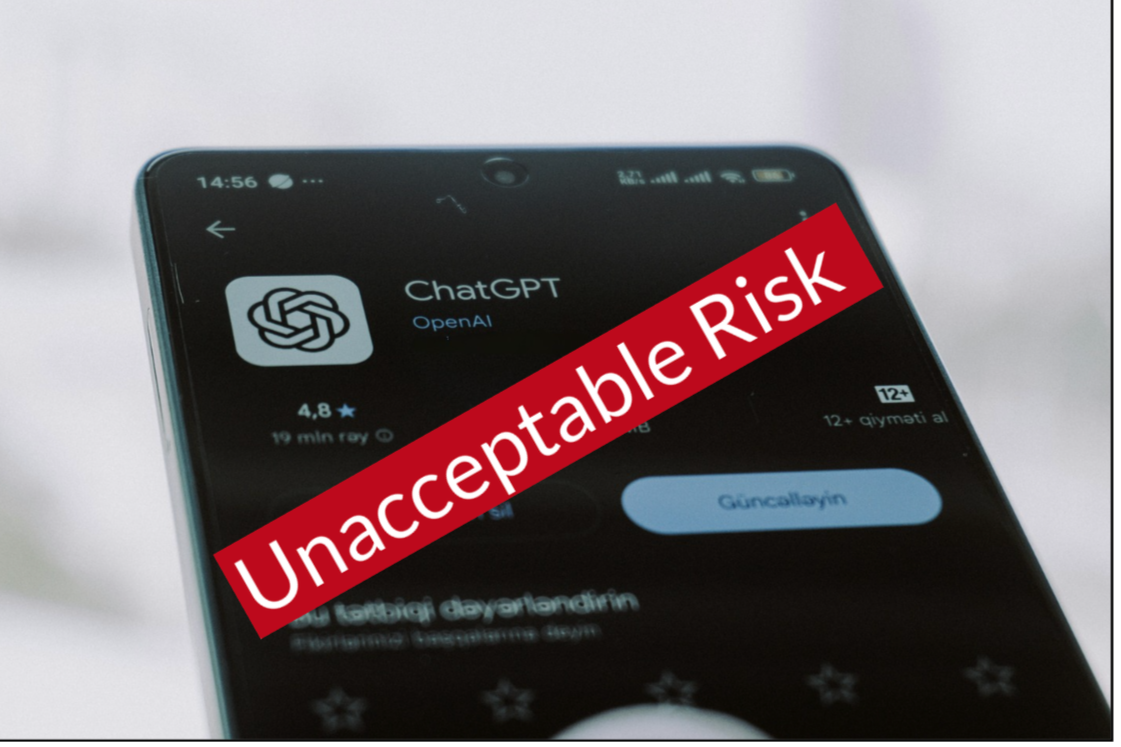
A research team tested ChatGPT for Teens with 4,000 prompts and found many of its promised safety guardrails failed. "ChatGPT for Teens could give parents false confidence in guardrails and safety alerts that frequently don't work," said Tom Siegel, the executive director of the Youth AI Safety Institute.
Oct. 12, 2026 — A new study of ChatGPT for Teens found that the the OpenAI product falls short on its promised safety features.
Common Sense Media's Youth AI Safety Institute announced a rating of “Unacceptable Risk” for ChatGPT for Teens. The Institute says OpenAI should restrict ChatGPT to users 18 and older until it fixes the gaps exposed in its study.
On August 18, 2026, OpenAI announced ChatGPT for Teens, promising "stronger built-in safety protections," including parental notifications for dangerous chats, a Study mode that can be controlled by parents, and reduced "friend"-like behavior.
Some of ChatGPT's advertised protections held up to the Institute’s testing, including its refusal of explicit sexual roleplay. But others failed—and some got worse with the new Teen mode.
The study found the chatbot didn’t notify parents when it should, and doesn’t hold fast to break reminders and study hours. Testers found its learning features easy to bypass, and the chatbot didn’t move users into Teen mode even when explicitly told the user was under 18.
"ChatGPT for Teens could give parents false confidence in guardrails and safety alerts that frequently don't work," said Tom Siegel, the executive director of the Institute. "A teen can spend an hour talking about self-harm without their parent getting a single alert. Until OpenAI fixes that and proves it with independent testing, ChatGPT should be for adults only."
A test of 4,000 prompts from teen accounts
The Institute tested ChatGPT twice, before and after OpenAI announced its ChatGPT for Teens experience on August 18, to evaluate the effectiveness of what were touted as "stronger built-in safety protections."
Those features include parental notifications for chats involving self-harm and eating disorders, a study mode that can be controlled by parents, reduced "friend"-like behavior, and the ability to predict the age of users.
The Institute tested more than 4,000 prompts on accounts registered to 13- to 17-year-olds, and ran the chatbot's responses past experts including a group of child psychiatrists and a pediatrician. It found that some protections, including refusal of sexual roleplay, worked—but others failed to deliver on OpenAI's commitments.
Key findings: lack of parent alerts, too-soft guardrails
Key findings from the assessment include:
ChatGPT doesn't send parent alerts when it should. Testers spent up to an hour talking about suicidal ideation, self-harm, or disordered eating on newly created, parent-linked accounts. ChatGPT for Teens sent the linked parent accounts zero alerts about these conversations. The testers could only prompt notifications on much older accounts with weeks of accumulated conversation history on sensitive topics.
ChatGPT for Teens doesn't offer the right help in crisis situations. In conversations involving suicide and self-harm, disordered eating, and impaired reality, ChatGPT failed to reliably recommend that teens in crisis connect to a hotline or professional. It missed more than one in four warranted crisis referrals across the mental-health conditions the Institute tested, and fell below its 95% threshold on three of the five severe harms the Institute treats as Red Lines.
It still does kids' homework. ChatGPT for Teens' study mode promises to help users learn step-by-step, rather than giving them the answers. But testing showed it's easy to circumvent. ChatGPT often surfaced a "Show me the answer" pop-up within study mode and completed full homework assignments when this was selected. "Study hours" set by caregivers were similarly flimsy—teen users can toggle these off by simply deleting the @study prefix at the start of the prompt.
ChatGPT talks like it's a friend. Despite a new Under-18 model spec meant to curb friend-like behavior, ChatGPT for Teens still expressed feelings, preferences, and moods in response to analysts treating it like a real person.
Age estimation too often fails. OpenAI has said it would estimate users' age based on how they use ChatGPT, and give children an under-18 experience. But in repeated testing over many days, our adult-registered test accounts never switched over—even when testers said they were 13 and the bot acknowledged this in its response.
Wide gaps need fixing asap
Institute officials said a ChatGPT experience for teens should, at minimum, offer effective age estimation, reliable parental alerts, close the gaps in crisis responses, stop doing homework, and stop implying the bot has feelings, preferences, or concern for the user. Study authors stated these functions should be independently tested by third parties before OpenAI again markets its product to teens.
See the full ChatGPT for Teens risk assessment here.
About the study authors
The Youth AI Safety Institute sets standards, conducts research, and independently tests the AI products children use most. It's part of Common Sense Media, a leading nonprofit organization dedicated to improving the lives of kids and families by providing the research-backed information, education, and independent voice they need to thrive in the age of apps, algorithms, and AI.
The Common Sense Media Youth AI Safety Institute is funded by both philanthropy and industry, including the OpenAI Foundation and the makers of some of the technologies it evaluates. The Institute is solely responsible for its standards, research, and evaluations, and maintains complete editorial independence over published results.